When to Aerate Your Lawn by Grass Type and Region
Learn the best time to core aerate cool-season and warm-season lawns, how to tell if yours needs it, and the steps and mistakes to avoid.
 Save
The best time to aerate depends on your grass type. Cool-season lawns (bluegrass, fescue, ryegrass) are aerated in early fall or spring, while warm-season lawns (Bermuda, zoysia, centipede, St. Augustine) are aerated in late spring or early summer. The rule behind both is the same: aerate only when the grass is actively growing so it can fill in the holes quickly.
Quick answer
| Grass type | Best aeration window | Why |
|---|---|---|
| Cool-season (Kentucky bluegrass, tall fescue, ryegrass) | Early fall; spring is the second choice | Mild weather and active growth let the lawn recover |
| Warm-season (Bermuda, zoysia, centipede, St. Augustine) | Late spring to early summer (University of Maryland Extension says June through July) | Growth is at its peak and recovery is fast |
| Any grass, dormant or stressed | Do not aerate | The lawn cannot repair the damage |
Iowa State University Extension names September and April as the best months for Kentucky bluegrass and other cool-season lawns in Iowa. Southern lawns shift later in spring, so check your state’s extension office for local dates.
What aeration does
Over time, foot traffic, mowing and rain pack the soil down, especially heavy clay. Maryland’s extension notes that compaction often starts in the top quarter to half inch of soil, where it can block water and air from reaching roots. Core aeration pulls out small plugs of soil so that:
- Water, air and nutrients move down to the roots more easily.
- Roots can grow deeper, which helps the lawn handle dry spells.
- Thatch (the layer of dead stems and roots at the soil surface) breaks down more readily.
- Seed, lime and fertilizer reach the soil instead of sitting on top.
Aeration does cause some short-term disruption, which is why timing matters so much. Doing it in the grass’s growth season means it recovers fast.
Does your lawn need it?
You do not have to aerate on a fixed date every year. Signs that a lawn is compacted include:
- Water puddles or runs off instead of soaking in.
- The soil is hard to push a screwdriver or garden fork into.
- The grass is thin even though you water and feed it.
- The lawn gets heavy traffic from kids, pets or parked vehicles.
- A thick thatch layer has built up.
As a general guide, Maryland suggests every 2 to 4 years for typical home lawns and every 1 to 2 years for heavily used ones. Clemson Extension says warm-season lawns can be aerated at least once a year, more often when traffic is heavy.
What you need
- A core (plug) aerator. Small lawns can use a manual one; larger lawns are easier with a power core aerator. Clemson reports rental of equipment at around $107 per day, though prices vary by area.
- Closed shoes with good grip and sturdy gloves.
- A garden hose or sprinkler to moisten dry soil.
- Grass seed, if you plan to overseed (cool-season lawns).
Machines have rotating tines and heavy parts, so read the rental company’s instructions before you start. Mark sprinkler heads, shallow irrigation lines, and buried cables or pet-fence wires before you begin, because tines can damage them.
Step-by-step
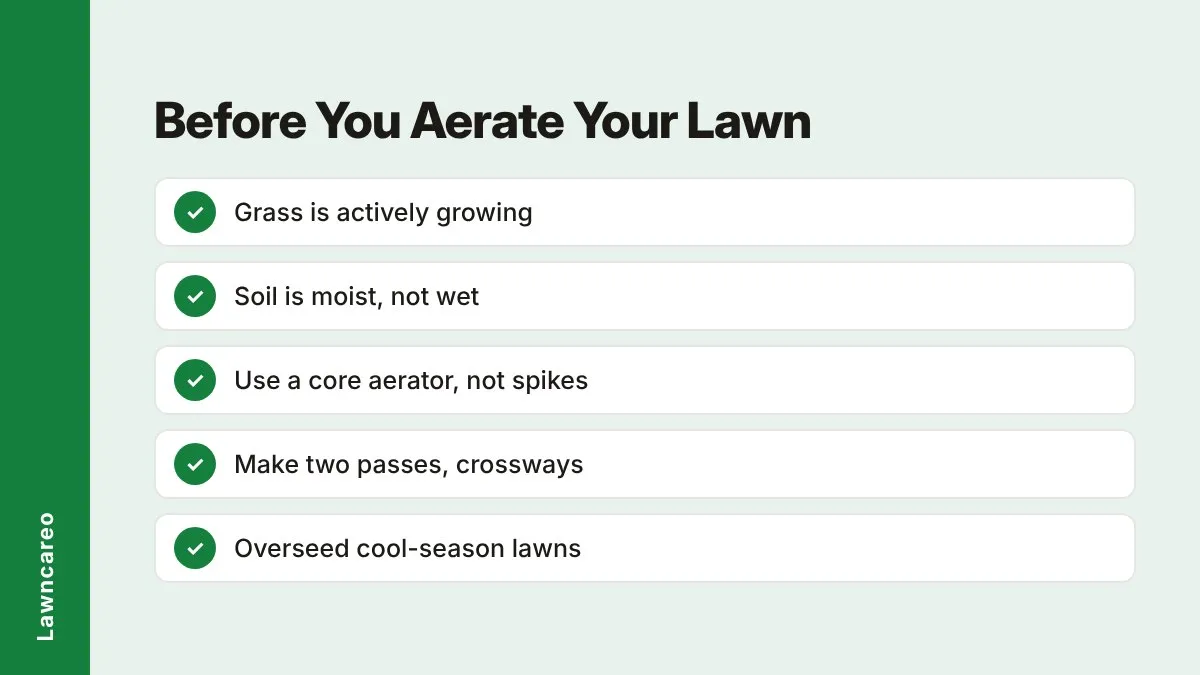
- Check the calendar. Confirm your grass is in its active growth window and not in drought dormancy or heat stress.
- Check the soil moisture. The soil should be moist but not wet. If it has been dry, water the lawn the day before. Aerating soggy soil makes a mess and can add to compaction.
- Mow slightly shorter than usual if your grass type allows it, and clear sticks, toys and debris.
- Mark hazards such as sprinkler heads and shallow lines.
- Make the first pass with the core aerator. University of Maryland Extension describes plugs about half to three-quarters of an inch wide, pulled from 2 to 4 inches deep, with holes spaced roughly 2 to 6 inches apart. Clemson describes holes about 2 to 3 inches deep.
- Make a second pass at right angles to the first. Clemson recommends two passes, one in each direction.
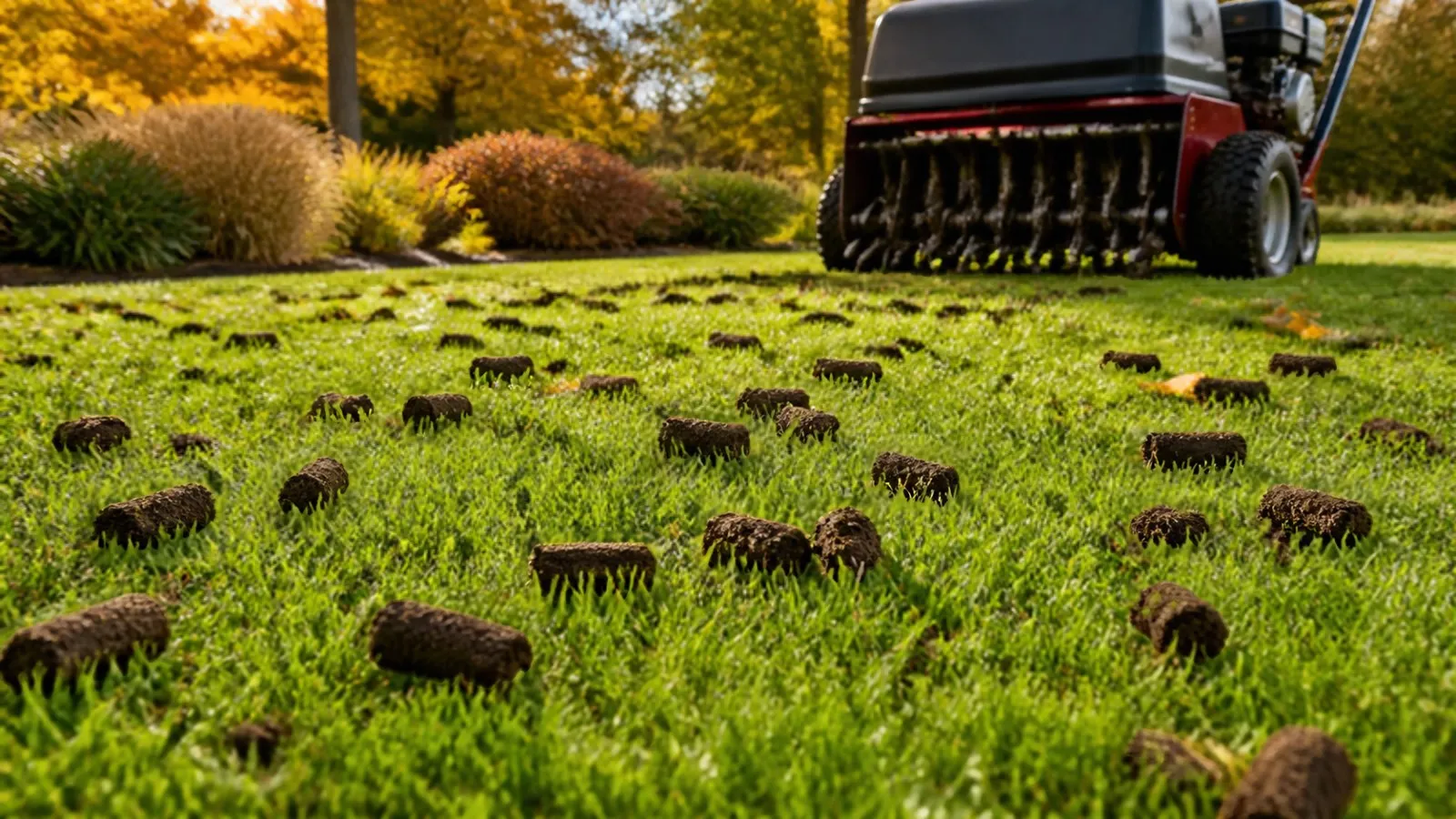
- Leave the plugs on the lawn. They break down on their own, usually within a couple of weeks, and return nutrients to the soil.
- Follow up. On cool-season lawns, overseed and apply starter fertilizer right away. On any lawn, keep the soil lightly moist while the grass recovers.
For a full fall plan that includes aeration, see our fall lawn care checklist.
Cool-season vs. warm-season timing in practice
| Situation | What to do |
|---|---|
| Northern lawn, bluegrass or fescue | Aerate in early fall (September in Iowa’s example), with spring as a backup |
| Overseeding a cool-season lawn | Aerate first, then spread seed the same day |
| Southern lawn, Bermuda or zoysia | Aerate in late spring or early summer, with at least four weeks of good growing weather ahead (Clemson) |
| Transition-zone lawn | Match the timing to the grass you actually have, not the region |
Clemson advises leaving at least four weeks of good growing weather before cold or extreme heat arrives so the grass can recover fully.
Common mistakes
- Using spike aerators or spiked sandals. Solid tines push soil sideways and can make compaction worse. Extension services say they are not a substitute for core aeration.
- Aerating a dormant lawn. If grass is brown from winter or summer dormancy, it cannot repair the holes.
- Aerating dry soil. The tines will not penetrate, so water first.
- Aerating wet soil. The soil smears rather than breaking out in clean plugs.
- Skipping the overseeding step on a thin cool-season lawn, when the open holes are the best opportunity to get seed into the ground.
- Aerating too often. Most home lawns do not need it every year.
When to call a professional
Consider hiring a lawn care company if your lawn is large, the yard is sloped, you cannot get a power aerator home or you are unsure where sprinkler lines run. If water still pools after aeration, the problem may be drainage, not compaction, and a landscape professional can assess it.
Sources
 Save
Frequently asked questions
Can I aerate my lawn in winter?
No. Aerate only while your grass is actively growing, and never when it is dormant. Cool-season lawns are aerated in fall or spring, and warm-season lawns in late spring or summer.
How often should I aerate my lawn?
University of Maryland Extension suggests every 2 to 4 years for home lawns and every 1 to 2 years for lawns with heavy foot traffic. Clemson suggests warm-season lawns can be aerated at least once a year, more often with heavy traffic.
Is a spike aerator as good as a core aerator?
No. Solid spikes push the soil aside and can increase compaction, while core aerators pull out plugs and leave open holes. Extension services recommend core aeration.
Should I aerate before overseeding?
Yes. The holes give seed a place to settle, which improves contact between seed and soil, so aerate first and then spread the seed.